Duration
19 Days

Duration
19 Days

Group Size
12

Tour Type
Specific Tour

Language
English
Overview
Island peak, also known as ”Imja Tse” lies on the south end of the Mount Lhotse Shar and a few miles away from Mount Everest. The name of the peak has been nominated by Eric Shiptons from the UK in 1953 where the view of the peak from Dingboche, made the peak look like an Island in a sea of Ice.
Flying from Bustling city of Kathmandu to the lukla airstrip, We will begin our Journey to Island peak and Everest base camp following a less trodden trail to the Everest base camp and Kallapattar (The greatest panorama point of the Everest region at 5445m) for proper acclimatization before turning attention to the Island peak summit. Our expert climber will provide a special climbing training at Island Base camp where you will get instruction, ensuring all of the necessary climbing skills to scale the summit safely and successfully. One of the best things about Island peak climb is that there is no need to establish a permanent camp as other giant mount expedition.
Climbing Island peak is quite physically demanding, yet not technically challenging. Any fit and acclimatized person having strong determination can join the peak climb. Journey through the different hills and valley, Sherpa cultures, and cuisines, meet local people and enrich yourself with unique experiences This Island peak climb and Everest base camp trek will leave you deeply changed and provide a true Himalayan mountaineering experience.
This Island peak climb, stemming from Everest base camp will provide you the ultimate Himalayan mountaineering experience, and take you though authentic Nepali culture. this all around enriching experience is sure to leave you with a lingering since of accomplishment and cultural awareness.
3
USDYou're interested in
A Step By Step Treks & Adventure representative will be waiting for you at the airport. He/she will then drop us off at our hotel where we can take a rest. In the evening we can enjoy a short visit around mix colorful touristic hub at Thamel and as well as introduce the Nepalese mix culture with food and drinks.
Today is our second big day for exploring the entire popular Kathmandu UNESCO World Heritage Sites. This spot shows you the most highlight of Nepal’s cultural and religious heritages. Our following days will be Kathmandu Durbar Square which showcases Kathmandu’s rich architectural prowess during the Malla dynasty (c1201–1769), and then Swayambhunath Stupa which tourists commonly refer to as the ‘Monkey Temple’ owing to a large number of the monkey population in the vicinity. Next is Pashupatinath Temple which is one of the most sacred pilgrimage sites for Hindus all over the world followed by the Buddhist shrine of Boudhanath which is one of the largest stupas in the world. Overnight in Kathmandu.
After breakfast, we will be taken to the domestic terminal of TIA for an early morning flight to Lukla. After a flying above the breathtaking green and white mountains, we reach Tenzing-Hillary Airport at Lukla. This is one of the most beautiful air routes in the world culminating in a landing on a hillside surrounded by high mountains. Upon our arrival at Lukla, we meet our other crew members and after some packing and arrangements, we start our trek through the prosperous village of Lukla until we reach Phakding. To assist in acclimatization, we only have a short hike today. However, if interested in additional activities, we can take a side trip to a nearby monastery. Overnight in Phakding.
After breakfast, we walk through beautiful pine forests and then along Dudh Koshi River ending our nature-filled journey at Namche Bazaar. After walking for almost over an hour, we come across the glistening Mt. Thamserku (6,608m) on our right and also experience the serenity of pine, fir and juniper forests throughout our journey. If the weather is clear, we may even catch a glimpse of Mt. Everest peering over the Lhotse-Nuptse ridge. We continue walking until we reach the entrance to Sagarmatha National Park, Namche Bazaar, the gateway to Mt. Everest and the main trading center of this region. This day we cross five suspension bridges, the last one also known as the Hillary Bridge being the highest. It is an uphill walk from Hillary Bridge to Namche Bazaar. Overnight in Namche Bazaar.
This is the day set aside for acclimatization. Health experts recommend that we stay active and move around even during the rest day instead of being idle. There are a few options set aside for this day. We can either stroll around Namche’s quaint villages or come in contact with the Sherpa people and their rich culture, or we can hike up to the Everest View Hotel and enjoy an up-close view of the mighty Everest. While in the Namche village or upon returning from the hike to the Everest View Hotel, trekkers may also visit the local museum containing exhibits displaying the area’s native flora and fauna as well as the history of the Mount Everest region. For trekkers who want to hike for a little longer, a hike to Khumjung village (5-6 hours) may also be an option. While in the village we can visit the Edmund Hillary School and Khumjung Monastery (a monastery famous for housing the head of the Yeti!). Overnight in Namche Bazaar.
After breakfast, we trek towards Tengboche. It is an easy walk from Namche to Phunki. Upon reaching Phunki, we ascend towards Tengboche, a village that houses the very famous Tengboche monastery which is the largest monastery of the Everest region. Located amidst the Sagarmatha National Park (a UNESCO World Heritage Site of "outstanding universal value”), it is draped with the panoramic 360-degree view of the Himalayas, including Mt. Everest, Nuptse, Lhotse, Ama Dablam and Thamserku. The monastery opens at 3:00 pm so if we are lucky we might just be able to witness a religious ceremony. Overnight in Tengboche.
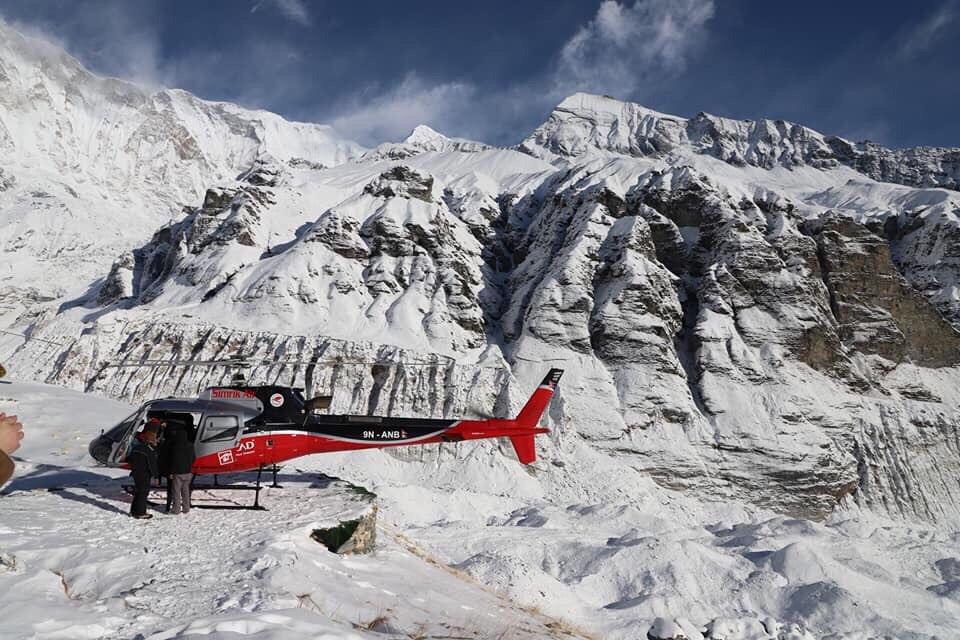
With the Himalayas as its backdrop, the monastery in Tengboche is in an excellent location. We visit the monastery in the morning and enjoy taking pictures of the monastery and the amazing landscape. We descend for about half an hour through a forest before crossing a river. Next, we trek uphill and notice that as we climb higher, the landscape becomes drier. We walk past a traditional Sherpa village of Pangboche before reaching Pheriche, a beautiful village located on a riverside. Here, we will also see a small helipad that is used for helicopter rescues during emergencies. We may even take a class with a mountain specialist in a medical clinic at Pheriche. Overnight in Pheriche.
After breakfast, we start with an easy walk towards Dugla. Next, we trek up the steep terminal moraine of the Khumbu Glacier and then pass through the boulder-strewn slopes as we ascend Chupki Lhara where we find an array of stones with prayer flags used as memorials to Scott Fischer (American mountaineer) and 10-time Everest summiteer Babu Chiri Sherpa (Nepalese mountain guide) who perished on a mission to climb Everest. The trail then continues to the Khumbu Glacier moraine and we find ourselves facing several great peaks - Khumbutse, Lingtren, Pumori and Mahalangur Himal. Overnight in Lobuche.
We take the trail to Everest Base Camp through the once vast Gorak Shep Lake. Continuing straight ahead, we come across the Indian army mountaineers' memorials. The path from here can be misleading; hence it is important that we follow our lead Sherpa diligently. The walk is strenuous due to thin air in the high altitude. We pass through rocky dunes, moraine, and streams before reaching the Everest Base Camp. Upon reaching the Everest Base Camp, we see tents of mountaineers that stand out in bright colors against the monotony of gray surroundings (especially in the spring). Nuptse, Khumbuste, and Pumori are the mountains we can view from the base camp. We get back to Gorak Shep for a good night's rest. Overnight in Gorak Shep.
We prepare for an early morning departure, amid pre-dawn darkness and cold temperatures (-10 to -14 C). Plus, there is always the potential for chilly winds which are quite common. Familiar peaks such as Lingtren, Khumbutse, and Changtse tower to the east even as Everest begins to reveal itself. But, it is upon reaching Kala Patthar that we get to see360 degree up-close and formidable views of Mt. Everest. We take pictures, enjoy the magnificent mountain panorama, and then return back to Lobuche for a good night's rest. Overnight in Lobuche.
After breakfast, we trek via Khumbu Glacier to Kongma La Base Camp (5,000m/16,404ft). The ascent to Kongma La pass is the most difficult part of our trek today. In the Kongma La, we see cairn wrapped in prayer flags to mark the pass. Then we descend gradually to Imja Khola valley, followed by another descent to Chhukung, a small summer settlement. After reaching Chhukung we will also check our equipment in order to get ready for our ultimate climb. Overnight in Chhukung. Note: If we do not want to undertake the Kongma La pass, we can follow another route via Dingboche to Chhukung instead.
The trek to Island Peak Base Camp is on a fairly steep trail. First, we climb south then turn east to the mainline of the valley. We then walk on a winding path below the southern flank of the moraine from the Lhotse Glacier. Next, we continue walking on a pleasant trail along a streamside. The route to the Amphu Labtsa lies to the southeast. A crisscross route through the Imja and Lhotse glacier moraines leads to a wide valley flanking the SW side of Island Peak. Overnight at Island Peak Base Camp.
We begin our pre-climb training today after breakfast. Our guides will provide training on peak climbing techniques and the proper ways of using climbing gear such as the ice axe , climbing boots, and crampons, harness, ascender, etc. The training will also include using ropes to go up and down. Although it is not mandatory to have prior training for Island Peak Climbing, we strongly believe that some training experience will boost your confidence and climbing skills to increase the chances of scaling the summit as well as to fully enjoy the experience. We can spend the rest of the day hiking to high camp and back or resting for the next day’s climb. Overnight at the base camp.
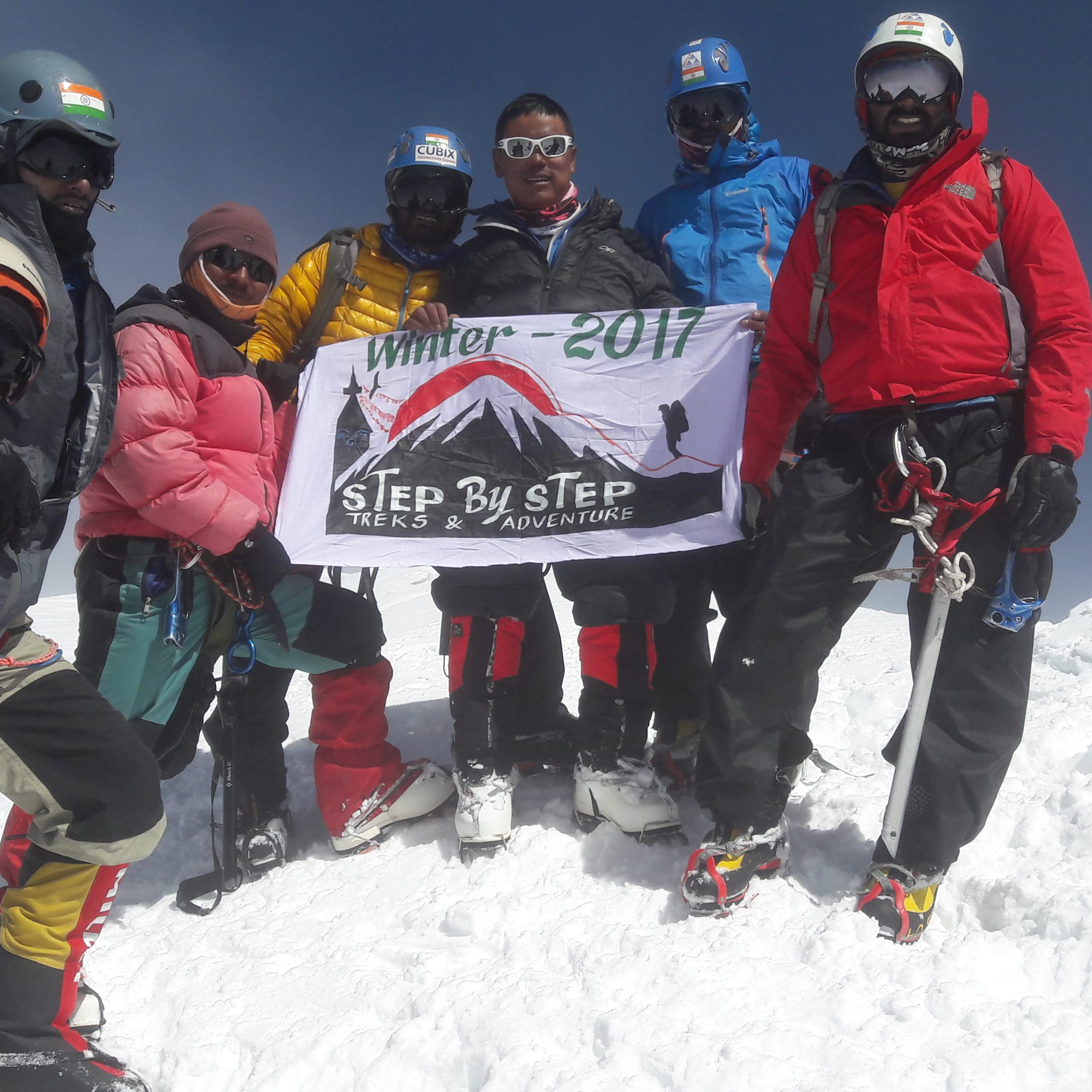
We wake up early today at around 12 to 1 am and have our breakfast before beginning our climb. It is important we reach the summit before noon because in the afternoon the strong winds in the highlands might become a barrier for a successful summit. The trail moves up beyond the base camp for several hundred meters before striking off the steep hillside. Initially sandy, the path soon turns to grass before becoming boulder strewn. As we climb up the hill, we will see that the slope narrows and the trail enters a steep rock channel. We climb the rock gully. This is not difficult, but there are several short rock steps to climb before we emerge on the right side of the gully. The route then follows a ridgeline, which leads to an exhilarating and exposed traverse onto the snout of the summit glacier. The guides will fix a rope when required. A steep snow slope leads us onto the summit ridge. Both fixed rope and man rope will be used during the climb for safety. We use fixed rope after successfully climbing on rock. The length of the rope will usually be 350 m. However, the length depends on the time of the season and the crevasses. There are two newly formed crevasses which are approximately 3 and 4 meters long. We will be using ladders to cross them. After enjoying the summit views and taking pictures, we descend all the way to Island Peak Base Camp where some of our crew are waiting for us. We celebrate on our successful Island Peak climb.
Today’s walk will be much easier as we descend to the lower altitudes. Following the same route back through the wide valley of Khumbu Khola, we pass through the beautiful Sherpa villages, Orsho and Shomare. We can also take a different trail to visit the Gompa in Upper Pangboche, which is believed to be the oldest in the Khumbu region or take the regular trail to reach Pangboche. Pangboche is a scenic village surrounded by Everest to its north, Ama Dablam, Thamserku, and Kangtaiga to the east, the Kongde range to the south and the Imja Tse River flowing through the wide fertile valley.
From Pangboche we retrace our steps down to the Imja Khola and up through the forest to Tengboche. If interested, we can also visit nuns at the Tengboche monastery. After lunch at Tengboche, we continue through the hillside blanketed by rhododendron and juniper trees. After crossing the bridge over the Dudh Koshi River, our trail follows the Dudh Koshi gorge descending rapidly through the pine forests before reaching Sansa. We keep a lookout for wildlife such as mountain goats, snow leopards, colorful pheasants, etc., while passing through the forest. After passing a chorten, we reach the army camp at Namche Bazaar. Overnight in Namche Bazaar.
The trail descends steeply downward so we need to walk cautiously as our shaky legs continuously battle the rocky terrain. After crossing the suspension bridges over the fast flowing Dudh Koshi and its tributaries, the trail becomes more level and natural. After our arrival in Lukla, we stretch those sore legs and recall the experiences of the last couple of weeks. Overnight in Lukla.
We catch an early morning flight to Kathmandu after our long mountain journey. After reaching Kathmandu, we can take a rest or do some souvenir shopping. If we want to explore any other areas of Kathmandu, we may do that today. Our guides can help you with both souvenirs shopping or sightseeing. There will be a farewell dinner in the evening to celebrate the climbers’ successful summit of the Island peak. Overnight in Kathmandu.
Your adventure in Nepal comes to an end today! There is nothing to do but trade emails with your travel companions and organize your photos. A representative from Our Company will take you to the airport, approximately 2 hours before your scheduled flight. On your way home you'll have plenty of time to plan your next adventure in the wonderful country of Nepal.
The price includes :
The price doesn't includes:
Below is a list of suggested clothing and equipment items to bring:
Below is a list of suggested clothing and equipment items to bring: